Loading...

From the Department of what has and might have been

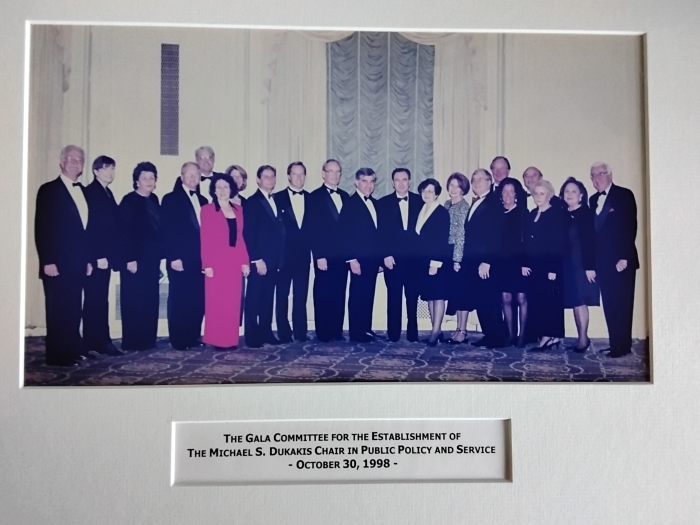
The arrival in 1999 of Richard Jackson as the new President of Anatolia College coincided with the launch of the Dukakis Chair and the first visit to ACT of Michael and Kitty Dukakis. Jackson's influence was decisive, notes David Wisner, Executive Director of the Dukakis Center. "Dick's mantra was to not fear punching above our weight," says Professor Wisner. "He certainly encouraged me to be ambitious, and so I was throughout his tenure as president of ACT."

Among the events Jackson and Wisner planned but never staged were lectures in 2000 by William Cohen, Secretary of Defense during the second Clinton Administration, and in 2007-08 by Jean-Pierre Jean-Pierre Chevènement, a Minister in several French governments who ran for the French Presidency in 2002. What might have been. 

Years later, well after Richard Jackson had retired, Wisner invited Audrey Tang, Taiwan's Minister of Digital Affairs, to deliver a keynote address via hologram teleconference at a conference to have taken place in March 2020. The event was cancelled owing to the outbreak in Greece of COVID-19.

Around that same time, during our twentieth anniversary season of public service initiatives, we compiled a tally of the events organized by and the then approximately 242 individual guests hosted at the Dukakis Center. The list has continued to expand since then, and given the proliferation of webcasts and webinars we have hosted it is nearly impossible to pull together a definitive list.

Regardless, we take this opportunity to thank some of those friends and colleagues who have spoken on more than one occasion at the Dukakis Center over the years. Hats off to John Koenig, former US Ambassador to Cyprus, and Charles Stewart, Kenan Sahin Distinguished Professor of Political Science at MIT, for holding the record to date of five appearances each (in person or virtually). Anna Damaskou was our most frequent partner during her tenure as President of the Board of Transparency International Greece.

Nicholas Burns, Monteagle Stearns, Jenifer Neils, Kostas Ifantis, Tasos Telloglou, Othon Anastasakis, Dimitris Papadimitriou, Efi Stefopoulou, Nikos Marantzidis, Tasos Tzikas, Dimitris Bouras, Dimitris Savvaidis, Nelson Graves, Kostas Kallergis, Alec Mally, Ilias Kouskouvelis+, Alan Makovsky, Epaminondas Christofilopoulos, Harry Lalatsis, Anna Damaskou, Ruth Sutton, and Alexandros Mallias.

In this spirit, it is also appropriate to offer deepest thanks to our sometime honorary advisory board members, whose number included Alan Henrikson, Alan Cafruny, Gerry Stoker, John Koenig, Leonidas Evangelidis, and Pavlos Apostolides.

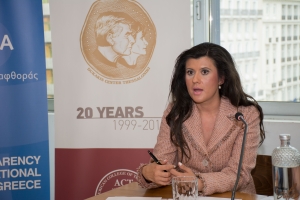
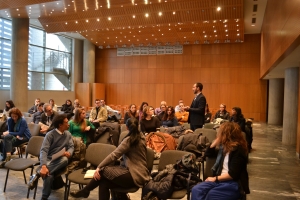
Pictured: Anna Damaskou speaking at the Dukakis Center conference "Gatekeepers of Democracy, Athens, 2019. Photo credit: Asterios Gousios


More

A Genealogy of public service

NB This note reprises a theme first outlined in an op-ed in the English edition of Kathimerini in March 2024.

Interlocutors occasionally wish to know why we do what we do. Even more frequently, we are asked by Greek acquaintances what we mean by this phrase “public service,” which seems to the uninitiated to imply a task performed by a salaried employee in the public sector. Are we merely imperialists imposing a foreign culture on our unwitting hosts?

In point of fact, the doctrinal and institutional origins of gestures rendered by private citizens to others for the benefit of one’s community predate by more than two thousand years the establishment of a professional civil service. One finds allusions in classical texts to some form or another of “public service,” for instance in dramatic representations of philanthrōpia and in debates over who was fit to hold public office in the polis. An articulate dedication to serve was later at the core of Stoicism, particularly in its late Hellenistic and Roman iterations, which acted as a bridge between the thought and values of antiquity and those of more modern times. As the Roman author Seneca wrote, “We shall remain in active service right up to the very end of life, without ceasing to apply ourselves to the common good, to help the individual, and to give assistance with an aged hand even to our enemies." Of course, there are many instances of beneficence and charitable giving in early Christianity which point in a similar direction.

To be sure, an appreciation of service has long been embedded in American popular culture. Bearing in mind that the Latin servus was used to designate a slave or a servant, Americans have characteristically regarded the voluntary act of serving -- one’s God, one’s country, one’s fellow citizens, even one’s neighbors -- to be the highest sort of interpersonal activity one can undertake. This ideal came to North America along multiple parallel paths -- Puritan and evangelical piety and Jesuit pedagogy; classical republicanism and certain strands of social contract theory and Utilitarianism; a modern approach to fulfilling a military obligation; the rise of the public utility corporation and of concurrent philanthropic practices, both dedicated to the “general welfare;” a rationale for colonial empire. Whatever its source, the message has found fertile ground in the United States, where an ethos of service is indeed deeply rooted, where, as the scholar Lynn Stout once observed, “unselfish prosocial behavior is so omnipresent… that it often goes unnoticed.” 

The French author Alexis de Tocqueville understood this already in the mid-nineteenth century. Tocqueville admired the Americans he met in his travels for what we would call their attachment to community service and their capacity to associate voluntarily in collective endeavors. “The health of a democratic society may be measured by the quality of functions performed by private citizens,” he concluded. A century after Tocqueville penned Democracy in America, this moral standard of service would inspire the Greatest Generation to overcome the Great Depression and defeat the Axis Powers. It continues to be compelling for many immigrants who discover a special sense of American-ness through a calling to public service, both as vocation and as profession, despite resistance in certain corners to the growth of the public sector brought about by the New Deal. 

The Roman Emperor Marcus Aurelius wrote in his Meditations, “Whenever you have trouble getting up in the morning, remind yourself that you’ve been made by nature for the purpose of working with others.” Nearly two millennia later Michael Dukakis, the Greek-American Governor of Massachusetts who ran in 1988 for President of the United States, rallied his young supporters, “There is nothing you can do in this world more fulfilling and more satisfying than giving of yourself to others, and making a contribution to your community and your state or your nation and your fellow citizens…” Such dedication still resonates among a wide swath of Americans in the early twenty-first century, and arguably underpins a younger generation’s penchant for activism, albeit more fleetingly, alas! as the ideals of service and participation and engagement are in jeopardy of becoming a cottage industry commandeered by venal self-help self-helpers. Who among us has not felt of late as if they were bowling alone? Who has not cringed when an aloof Congressperson soullessly offers thanks to a member of the military or a senior public official for their service? 

If the golden age of public service in the United States risks becoming a thing of the past, there are signs that we may be witnessing the advent of a new golden age right here in this country, where, fittingly, the notion advanced herein was first articulated, despite the specter of recurring anarchic violence and a perennial, if not systemic, lack of confidence in public authorities. 

Who among the foreigners in the audience has not been the beneficiary of the extraordinary kindness and hospitality which have distinguished Hellenes since the time of Homer. Who has not witnessed first hand the proliferation of civil society organizations and citizen initiatives throughout Greece over the past few decades, and not taken away the unmistakable impression that a characteristically Hellenic ethos of service animates these undertakings. Moreover, one is convinced that there are pockets of innovation and entrepreneurial endeavor throughout the Greek public sector, although the most committed among those intent on reforming the system from within are at times constrained to do their best work beyond Greece's borders. Their resourcefulness may not yet be the norm, but it is worth celebrating nonetheless.

So it is that the big story at the center bearing the name of Governor and First Lady Dukakis is not our longevity or our adherence to an American model of serving one another. It is rather that among the most significant events we have organized are those in which we showcase inspiring new approaches to public service programming, where we share the many lessons we continue to learn from our local peers. As Governor Dukakis might have put it, is there any greater expression of philanthrōpia than listening carefully to one another?

Pictured: Dukakis Center senior intern Gordan Jordanov reporting to stakeholders at Thessaloniki City Hall on a project to welcome migrants, May 2019.

More

Political Science and IR alumna Earns Leventis Scholarship

Naya Ravdidou, ACT alumna class of 2025, received the prestigious A.G. Leventis Foundation Scholarship for her 2025–26 graduate studies at Sciences Po Paris. This highly competitive scholarship is granted to only a small number of students each year, following a rigorous selection process. Sciences Po Paris is also highly selective and among the world’s top-ranked political science institutions. We hope that Naya’s milestone achievement will inspire many more.

More

Εισαγωγή στη Γεωπολιτική των Συγκρούσεων και στην Ανάλυση Γεωχωρικών Δεδομένων

By

Το πρόγραμμα του Lifelong Learning Center προσφέρει μια ξεχωριστή ευκαιρία για την θεωρητική κατανόηση και ανάλυση των γεω-χωρικών παραγόντων που συμβάλλουν στην ανάδυση και διαχείριση των περιφερειακών συγκρούσεων. Ο κεντρικός στόχος του προγράμματος είναι η εξοικείωση με την θεωρητική και εμπειρική ανάλυση των συγκρούσεων καθώς και η ανάπτυξη πρακτικών δεξιοτήτων για την συλλογή και ανάλυση των πολυεπίπεδων γεωχωρικών δεδομένων που αφορούν την αποτύπωση τους.


Σχετικά με το Πρόγραμμα

Το πρόγραμμα παρέχει μια ισχυρή θεωρητική-τεχνική κατάρτιση αναφορικά με τους παράγοντες που συμβάλλουν στην ανάδυση των ένοπλων συγκρούσεων και εξοικοιώνει τους συμμετέχοντες με τα μοντέλα διαχείρισης που αφορούν τον τερματισμό τους. Επιπλέον, το πρόγραμμα συμπεριλαμβάνει σχετικό εκπαιδευτικό εργαστήρι στο γνωστό και εύχρηστο λογισμικό συλλογής, οπτικοποίησης και ανάλυσης γεωχωρικών δεδομένων (QGIS). Μετά την ολοκλήρωση του μαθήματος, οι συμμετέχοντες θα είναι σε θέση να εντοπίζουν αποτελεσματικότερα τα αίτια-παράγοντες των συγκρούσεων και να κατανοήσουν καλύτερα την επίδραση των εθνοτικών, δημογραφικών, γεωγραφικών, οικονομικών και πολιτικών παραγόντων στην  διαμόρφωση των συγκρούσεων. Επίσης, δίνεται η ευκαιρία ανάπτυξης εξιδεικευμένης εμπειρικής γνώσης μέσα απο case studies γεωχωρικής και θεσμικής διαχείρισης συγκρούσεων, με την ανάλυση γνωστών παραδειγματων όπως η Βοσνία-Ερζεγοβίνη, Κόσοβο, Ιράκ, Β. Ιρλανδία.  Επιπλέον, η δυνατότητα εξοικοίωσης με τη συλλογή και οπτικοποίηση γεωχωρικών δεδομένων προσδίδει ενα πολύτιμο μεθοδολογικό πλεονέκτημα στους συμμετέχοντες.

QGIS

Το QGIS αποτελεί ένα από τα σημαντικότερα λογισμικά ανοιχτού κώδικα για τη διαχείριση, ανάλυση και οπτικοποίηση χωρικών δεδομένων. Πρόκειται για ένα συνεχώς εξελισσόμενο περιβάλλον, το οποίο προσφέρει προηγμένα εργαλεία χαρτογράφησης, χωρικής ανάλυσης, μοντελοποίησης και αυτοματοποίησης εργασιών μέσα από μια φιλική και ευέλικτη διεπαφή. Η ανοιχτή του φύση, σε συνδυασμό με την ενεργή παγκόσμια κοινότητα, το καθιστά ιδιαίτερα αξιόπιστο, επεκτάσιμο και προσιτό για επαγγελματίες, οργανισμούς και ερευνητές. Η χωρική ανάλυση και οπτικοποίηση είναι κρίσιμα πλεονεκτήματα για την διαδραστική αποτύπωση δεδομένων στην σύγχρονη ακαδημαϊκή ερευνά αλλά και για την ανάπτυξη συστημάτων υποστήριξης αποφάσεων σε όλους τους επαγγελματικούς τομείς που σχετίζονται με τη μελέτη και την κατηγοριοποίηση δημογραφικών και κοινωνικό-οικονομικών δεικτών στον γεωγραφικό χώρο.

Περιγραφή του Προγράμματος

Διάρκεια Προγράμματος

16 ώρες 

Ημερομηνίες/Ώρες

Παρασκευή 6 Μαρτίου 2026, 17:00-21:00
Σάββατο 7 Μαρτίου 2026, 10:00-16:00
Κυριακή 8 Μαρτίου 2026, 10:00-16:00

Σε ποιους απευθύνεται

Το εκπαιδευτικό σεμινάριο στην γεωπολιτική των συγκρούσεων και την ψηφιακή γεωχωρική ανάλυση (Geospatial Analysis) προσφέρει μια αξιοσημείωτη δυνατότητα σε ενα ευρύ φάσμα σπουδαστών, νέων ερευνητών αλλά και επαγγελματιών που ενδιαφέρονται για την κατανόηση, ανάλυση και οπτικοποίηση δεδομένων (data visualization) σε σύνθετα γεωπολιτικά περιβάλλοντα. Το εισαγωγικό πρόγραμμα έχει σχεδιαστεί για φοιτητές, ερευνητές, στρατιωτικό προσωπικό και νέους ακαδημαϊκούς στους τομείς των Διεθνών Σχέσεων, της Πολιτικής Επιστήμης και των Περιφερειακών Σπουδών (Area Studies - Μεσόγειος, Βαλκάνια, Μαύρη Θάλασσα, Μέση Ανατολή, Καύκασος), καθως και για εργαζόμενους σε διεθνείς και μη κυβερνητικούς οργανισμούς (ΜΚΟ). Επιπλέον, το πρόγραμμα απευθύνεται και σε επαγγελματίες του ευρύτερου βιομηχανικού τομέα οι οποίοι δραστηριοποιούνται σε γεωπολιτικά ευαίσθητες περιοχές.

Μαθησιακά Αποτελέσματα

  1. Ολοκληρωμένη Κατανόηση των Σύγκρουσεων: γνώση των θεωριών σύγκρουσης και εξοικοίωση με τις γεωπολιτικές πολυπλοκότητες που ενυπάρχουν.
  2. Συγκριτική Ανάλυση Μοντέλων Ρύθμισης των Συγκρούσεων: Αξιολόγηση καταστάσεων σύγκρουσης για τον σχεδιασμό κατάλληλων στρατηγικών θεσμικής διαχείρισης.
  3. Πρακτική εξοικοίωση με την λειτουργία προγράμματος γεωχωρικής ανάλυσης δεδομένων και απεικόνισης δεικτών.

Αναλυτική Θεματολογία

  1. Ανάλυση της Γεωπολιτικής των Συγκρούσεων: Παράγοντες και δείκτες αξιολόγησης
  2. Προσεγγίσεις για τη Ρύθμιση των Συγκρούσεων: Εδαφικοί και Μη-εδαφικοί σχεδιασμοί
  3. Εισαγωγή στο λογισμικό ψηφιακής γεωπληροφορικής QGIS: Οπτικοποίηση και ανάλυση δεδομένων που σχετίζονται με συγκρούσεις.

Εισηγητές

Δρ Παύλος Ι. Κοκτσίδης

Αναπληρωτής Καθηγητής Διεθνών Σχέσεων και Σπουδών Διεθνούς Ασφάλειας, Τμήμα Πολιτικής Επιστήμης και Διεθνών Σχέσεων, Anatolia American University. Πτυχίο Πολιτικής και Διεθνών Σχέσεων, Lancaster University, 1999-2002; Μεταπτυχιακό (MA) στις Εθνοτικές Συγκρούσεις,  Queen’s University of Belfast, 2002-2003. Διδακτορικό στην Ανάλυση Ασφάλειας και Συγκρούσεων στη Νοτιοανατολική Ευρώπη, Queen;s University of Belfast, 2006-2009. Διδάσκει στον τομέα των Διεθνών Σχέσεων και Σπουδών Ασφάλειας στο AAU.  Εργάστηκε ως λέκτορας  Διεθνών Σχέσεων στο Πανεπιστήμιο Κύπρου για μια δεκαετία και διετέλεσε διαχειριστής Ευρωπαικών και κρατικών ερευνητικών έργων. Από το 2019 έως το 2024 συντόνισε το ετήσιο πρόγραμμα σεμιναρίων που χρηματοδοτείται από το Virginia Tech University για τις Μελέτες Συγκρούσεων σε συνεργασία με το Τμήμα Πολιτικών Επιστημών του VT. Είναι κύριος ερευνητής στο Ινστιτούτο Μελετών Πολιτικής και Δημοκρατίας (ISPD). Η έρευνά του επικεντρώνεται στην ανάλυση εθνοτικών συγκρούσεων στη ΝΑ Ευρώπη και την Ανατολική Μεσόγειο, την οικοδόμηση κρατών, τον πόλεμο και την ανάπτυξη στρατηγικής σκέψης στον τομέα των διεθνών σχέσεων γενικότερα. Το έργο του παρουσιάζεται τακτικά σε διεθνή συνέδρια, εργαστήρια και συζητήσεις στρογγυλής τραπέζης (IPSA, ECPR, PSA, EISA). Η έρευνά του εμφανίζεται σε διεθνώς αναγνωρισμένα περιοδικά και κεφάλαια βιβλίων (Journal of Ethnopolitics, Journal of Balkan and Near Eastern Studies, Eastern European Quarterly, Dynamics of Asymmetric Conflict, Civil Wars, Mediterranean Quarterly, Journal of Peace and Conflict Studies, Perspectives on Federalism, Journal of Ethnopolitics and Minority Issues in Europe). Είναι συγγραφέας των βιβλίων Ethnofederalism in Cyprus: Territory, Power and Security (Routledge: London 2024), Strategic Rebellion: Ethnic Conflict in FYR Macedonia and the Balkans (Peter Lang: Oxford 2012) και επιμελητής του βιβλίου Societies in Transition: Economic, Political and Security Transformations in Contemporary Europe (Springer, Frankfurt 2015).

Ανδρέας Γεωργίου  

Ο Ανδρέας Γεωργίου εργάζεται ως Senior Research Engineer στο Κέντρο Αριστείας για Έρευνα και Καινοτομία ΚΟΙΟΣ, όπου ηγείται της ομάδας Γεωγραφικών Συστημάτων Πληροφοριών (ΓΣΠ). Είναι κάτοχος B.Sc. στις Περιβαλλοντικές Επιστήμες και M.Sc. στην Εφαρμοσμένη Γεωπληροφορική στη Διαχείριση Περιβαλλοντικών Κινδύνων από το Πανεπιστήμιο Αιγαίου. Διαθέτει πολυετή εμπειρία σε ευρωπαϊκά και εθνικά ερευνητικά έργα, με εξειδίκευση στη θεματική χαρτογραφία, τη χωρική ανάλυση, τη γεωχωρική μοντελοποίηση και την ανάπτυξη ψηφιακών συστημάτων λήψης αποφάσεων με ουσιαστικό κοινωνικό αντίκτυπο. Στο ΚΟΙΟΣ συντονίζει την ανάπτυξη ψηφιακών γεωχωρικών λύσεων, εργαλείων και οικοσυστημάτων που ενισχύουν τη συνεργασία με τον δημόσιο τομέα και υποστηρίζουν τον ψηφιακό μετασχηματισμό των δημόσιων αρχών, εξασφαλίζοντας την εναρμόνιση με τις τοπικές και ευρωπαϊκές πολιτικές. Παράλληλα, συμβάλλει ενεργά στην προώθηση των ΓΣΠ στην εκπαίδευση μέσω παρουσιάσεων, εργαστηρίων και δράσεων ενημέρωσης, με στόχο την ενίσχυση δεξιοτήτων και την ευαισθητοποίηση στον τομέα των γεωχωρικών τεχνολογιών. Αποτελεί, τέλος, ιδρυτικό μέλος της κοινότητας QGIS στην Κύπρο.

Συμμετοχή

Κόστος συμμετοχής: 350€

Ειδικές τιμές

Early bird (για εγγραφές έως 27/2/2026) -20% 280€
Απόφοιτοι Anatolia High School & ACT: -10%
Ισχύουν εταιρικές εκπτώσεις για περισσότερες πληροφορίες επικοινωνήστε μαζί μας μέσω email στο This email address is being protected from spambots. You need JavaScript enabled to view it. 

Δικαίωμα αθροιστικής έκπτωσης μέχρι 20%, εφόσον τηρούνται οι παραπάνω προϋποθέσεις.

Μετά την αποστολή της αίτησης συμμετοχής, ένας εκπρόσωπος του Lifelong Learning Center του ACT θα επικοινωνήσει μαζί σας για τη διαδικασία της εγγραφής σας στο πρόγραμμα και την πληρωμή.

Μετά την ολοκλήρωση του προγράμματος, οι συμμετέχοντες θα λάβουν το πιστοποιητικό παρακολούθησης από το Lifelong Learning Center του ACT.

Περισσότερες Πληροφορίες

Μπορείτε να επικοινωνείτε με το Lifelong Learning Center στο τηλέφωνο 2310 398 430 ή μέσω email στο This email address is being protected from spambots. You need JavaScript enabled to view it. με την ένδειξη "Εισαγωγή στην Γεωπολιτική".

More

Food & Beverage Cost Control για Επιχειρήσεις Εστίασης

By

Ξοδεύετε χρήματα, αλλά δεν ξέρετε πού ακριβώς πηγαίνουν; Δεν είστε βέβαιοι από πού πραγματικά προκύπτει το κέρδος της επιχείρησής σας; Αναρωτιέστε αν οι τιμές στον κατάλογό σας είναι οι σωστές;

Σε μια εποχή που το κόστος λειτουργίας στην εστίαση αυξάνεται και η καθημερινότητα της επιχείρησης γίνεται ολοένα και πιο απαιτητική, η δυνατότητα να έχετε ξεκάθαρο και ουσιαστικό έλεγχο του κόστους είναι πιο σημαντική - αλλά και πιο εφικτή - από ποτέ.

Με το νέο πρόγραμμα του Lifelong Learning Center ήρθε η στιγμή να γνωρίσετε τις απαραίτητες τεχνικές κοστολόγησης και ελέγχου κόστους, για την αποτελεσματικότερη οικονομική διαχείριση της επιχείρησης σας. 

ΕΓΓΡΑΦΕΙΤΕ ΕΔΩ

Σκοπός του προγράμματος

Σκοπός του προγράμματος είναι να βοηθήσει τους συμμετέχοντες να γνωρίσουν και να κατανοήσουν τις βασικές τεχνικές κοστολόγησης και ελέγχου κόστους. Μέσα από απλά και πρακτικά παραδείγματα, θα δουν τι χρειάζεται να παρακολουθούν σε σχέση με το κόστος, ποια στοιχεία και δεδομένα αξίζει να ζητούν για έλεγχο και πώς μπορούν να έχουν μια πιο καθαρή και ουσιαστική εικόνα για τη λειτουργία και τα έξοδα μιας επιχείρησης F&B.

Σε ποιους απευθύνεται

Το πρόγραμμα απευθύνεται σε:

  • Ιδιοκτήτες και εργαζόμενους επιχειρήσεων εστίασης & φιλοξενίας (καφετέριες, εστιατόρια, ξενοδοχεία, bistro, bar, catering, beach bars, κ.λπ.)
  • Σπουδαστές του κλάδου του τουρισμού
  • Νέους επαγγελματίες & όσους σκέφτονται να ανοίξουν δική τους επιχείρηση ή να απασχοληθούν με επιχειρήσεις εστίασης

Τι θα μάθετε

Οι συμμετέχοντες θα εξοικειωθούν με βασικές έννοιες, ορολογίες και απλές μεθόδους που μπορούν να αρχίσουν να εφαρμόζουν άμεσα. Μεταξύ άλλων, θα μάθουν :

  • Τι είναι το Cost Control και ποιος ο ρόλος του στην εστίαση.
  • Πώς να εντοπίζουν πού πηγαίνει κάθε ευρώ της επιχείρησης.
  • Τη σημασία της απογραφής των πρώτων υλών και της σωστής αποτίμησής τους.
  • Πώς υπολογίζεται το κόστος πωληθέντων (COGS) με εύκολο και κατανοητό τρόπο.
  • Πώς να κοστολογούν απλά υλικά, μερίδες και πιάτα.
  • Πώς να αναγνωρίζουν σπατάλες που συσσωρεύονται.
  • Πώς να διαβάζουν και να αναλύουν τα βασικά στοιχεία κερδοφορίας.
  • Πώς να βρίσκουν το νεκρό σημείο της επιχείρησης και πως  να παίρνουν καλύτερες αποφάσεις.

Περιγραφή του Προγράμματος

Διάρκεια Προγράμματος

12 ώρες 

Ημερομηνίες/Ώρες


Θεματολογία

  • Επιχειρήσεις Εστίασης και Κόστος
  • Απογραφή, Έλεγχος Αποθεμάτων και Αξιολόγηση Προμηθευτών
  • Food Cost Analysis & Cost of Goods Sold (COGS)
  • Βασικές Τεχνικές Κοστολόγησης στην Εστίαση
  • Menu Engineering και Τιμολογιακές Αποφάσεις
  • Ανάλυση Νεκρού Σημείου Επιχείρησης


Εισηγητής

kalamaki maryΓιώργος Μαυρίδης | Οικονομολόγος - Λογιστής Α' Τάξης


Ο Γιώργος Μαυρίδης είναι οικονομολόγος με εξειδίκευση στη Διοικητική Λογιστική. Με ιδιαίτερο ενδιαφέρον για τον χώρο της εστίασης και της φιλοξενίας, έχει αναπτύξει το εκπαιδευτικό πρόγραμμα F&B Cost Control, το οποίο βοηθά επαγγελματίες του κλάδου της εστίασης και του τουρισμού να ελέγχουν αποτελεσματικά το κόστος, να αυξάνουν την κερδοφορία τους και να στοχεύουν στην βιώσιμη ανάπτυξη της επιχείρησης που εργάζονται. Κατέχει Μεταπτυχιακό Δίπλωμα στην Εφαρμοσμένη Λογιστική Ελεγκτική (MSc) από το Πανεπιστήμιο Μακεδονίας και Μεταπτυχιακό Δίπλωμα στη Διοίκηση Επιχειρήσεων (MBA) από το ACT - American College of Thessaloniki, ενώ οι βασικές του σπουδές είναι στα Οικονομικά (BA) του Πανεπιστημίου Μακεδονίας.

Συμμετοχή

ΕΓΓΡΑΦΕΙΤΕ ΕΔΩ

Κόστος συμμετοχής: 240€

Ειδικές τιμές

Early bird (για εγγραφές έως) : -20% 190€
Απόφοιτοι Anatolia High School & ACT: -10%
Ισχύουν εταιρικές εκπτώσεις για περισσότερες πληροφορίες επικοινωνήστε μαζί μας μέσω email στο This email address is being protected from spambots. You need JavaScript enabled to view it. 

Δικαίωμα αθροιστικής έκπτωσης μέχρι 20%, εφόσον τηρούνται οι παραπάνω προϋποθέσεις.

Το πρόγραμμα πραγματοποιείται δια ζώσης στις εγκαταστάσεις του campus του ACT.

Μετά την αποστολή της αίτησης συμμετοχής, ένας εκπρόσωπος του Lifelong Learning Center του ACT θα επικοινωνήσει μαζί σας για τη διαδικασία της εγγραφής σας στο πρόγραμμα και την πληρωμή.

Μετά την ολοκλήρωση του προγράμματος, οι συμμετέχοντες θα λάβουν το πιστοποιητικό παρακολούθησης από το Lifelong Learning Center του ACT.

Περισσότερες Πληροφορίες

Μπορείτε να επικοινωνείτε με το ACT Lifelong Learning Center στο τηλέφωνο 2310 398 430 ή μέσω email στο This email address is being protected from spambots. You need JavaScript enabled to view it. με την ένδειξη "Food & Beverage".

More

Career Opportunities

By

Our community is growing. If you’re exploring academic, administrative, or professional roles within Anatolia’s tertiary division, we invite you to discover opportunities at Anatolia American University.

At Anatolia American University, you’ll join an environment that values academic excellence, student success, and collaborative innovation.

  • Open roles across faculty & research, student services, and administration
  • A mission-driven, not-for-profit institution with a long Anatolia legacy
  • Clear application steps and timelines listed per position

Visit our dedicated careers page to view current openings and learn how to apply:

Careers at Anatolia University

More

Dr. Nikolaos F. Dimitriadis Participates in the Global Ethics Forum 2025 in Geneva

The Global Ethics Forum 2025 (GEF2025) that brought together over 500 participants, 78 speakers from 34 countries and 6 continents, convened in Geneva at a moment of profound global uncertainty, uniting scholars, policymakers, and faith leaders under the theme “Reinventing Responsible Governance: Navigating Dilemmas, Power, and Purpose.”

Dr. Nikolaos F. Dimitriadis, Professor of World Religions at the American College of Thessaloniki (ACT) and President of the Center of Ecumenical, Missiological and Environmental Studies (CEMES), participated in a deeply moving Roundtable titled “Preparing for Peace: What Kind of Innovative Initiatives and Spaces Are Needed for Mediation, Hope Regeneration, and Healing?”

Reflecting on the session, Dr. Dimitriadis expressed his appreciation to Globethics for their “inspiring initiative and unwavering commitment to advancing ethical reflection and cooperation at a time when our world needs it most.”

Speaking on the meaning of peace and mediation, he emphasized that “mediation, in its truest sense, must not be reduced to a negotiation table. It is a form of spiritual diplomacy, a pilgrimage from truth to transformation.” He further noted that this journey “calls us to unite moral accountability with prayerful encounter and concrete restorative action,” reminding participants that “peace is not merely achieved, but cultivated through metanoia, dialogue, and shared humanity.”

Concluding his remarks, Dr. Dimitriadis invited all participants to a shared commitment:

“Let us join our minds and hearts across traditions, nations, and narratives, to co-create spaces where peace is not only negotiated, but nurtured. Together, let us embody the transformation we seek, for a world reconciled in dignity and truth. Because We Care".

IMG 7807

More

MKT 301 Students Achieve Top 10% Global Performance in Market Simulation Game for Second Consecutive Year

For the second year in a row, students enrolled in the Entrepreneurial and Corporate Marketing Strategy course (MKT 301), led by Dr. Eirini Tsichla, Associate Professor of Marketing, have demonstrated exceptional performance through an innovative, real-world Market Simulation Game experience.

In this dynamic simulation, students stepped into the roles of Marketing Executives, leading a new marketing division within an international firm. They tackled real-world challenges such as selecting target markets, building brands, crafting advertising campaigns, recruiting sales teams, and making data-driven decisions to steer their company toward financial success. The exercise offered students a unique opportunity to apply core marketing and strategic concepts in a practical, high-stakes environment.

This year’s student teams rose to the occasion with outstanding results: two teams from ACT ranked among the top 10% of all student teams to ever participate in the simulation globally, earning them a spot in the prestigious Top 10% Hall of Fame.

As recognition of their hard work and strategic thinking, the students received official certificates and digital badges to showcase on their resumés and LinkedIn profiles — a valuable testament to their skills and accomplishments.

We proudly congratulate our students for their excellence and commitment to experiential learning. Their achievement is a reflection of their talent, teamwork, and the quality of education they receive.


More
 

17 Sevenidi St.
55535, Pylaia
Thessaloniki, Greece
Tel. +30 2310 398398
P.O.Box 21021
Email: This email address is being protected from spambots. You need JavaScript enabled to view it.