

|
|
 |


History
In 1999, as the Balkan component of the ACT international student body increased, a group of ACT instructors decided to introduce formal courses on Balkan history and politics. Since that time, the major problems of the region have been addressed directly and with no aversion to politics. In the multinational class environment and through the interdisciplinary character of our program, ACT students from all the countries in the region, including Greece, are gathered and challenged to open an honest debate. The goal is to promote the building of a climate of trust and confidence among the youth attending ACT classes, and make a lasting and legitimate contribution, however modest, to the process of mutual understanding throughout the Balkans. Today, ACT’s Balkan alumni have returned home and are making their mark in the public life of their countries, while the students from neighboring Greece and from scores of American universities have a deeper appreciation for the courage with which their counterparts in Southeast Europe are facing their challenges.
Overview
The Lucy Center for Balkan Studies was established thanks to a generous donation from ACT friend and trustee, Elias Kulukundis, and named after his late wife Lucy Platt Kulukundis. Elias Kulukundis, at once a ship owner and a distinguished man of letters, notably as the author of autobiographical accounts relating to his Greek heritage, decided to support the creation of the Center out of a fascination with the history and culture of Southeast Europe. The Center was created principally to facilitate the formal study of Southeast European affairs, particularly for undergraduate study abroad students spending a semester or academic year at ACT. The Lucy Center for Balkan Studies also acts as a forum for discussion and debate on important regional issues.
Teaching
Our teaching has continued to reflect a conscious decision to view the region of Southeast Europe as an exemplary site for political study. We believe there is much to be learned from the region if one is willing to forego the customary smugness which has characterized outside perspectives of the Balkans. Correspondingly, we treat the regimes in Southeast Europe not simply as entities in transition, but also and more fundamentally as arrangements worthy of study in their own right. Currently ACT lists in its catalogue Balkan studies courses in government, international relations, and civil society, and more advanced seminars in journalism and conflict, non-profit management (with limited internship opportunities) and regional integration.
Anthropology 221 - Ethnographic Accounts of Greek Culture
European Studies 212 - The Political Economy of European Integration
European Studies 311 - The Idea of Europe
European Studies 321 - Citizenship and Democracy in the EU
European Studies 341 - European Integration and Transatlantic Institutions
History 231 - Modern Greek History
History 233 - Modern and Contemporary Turkey
History 331 - Topics in Twentieth-Century Greek History
Politics 207 - The Modern Greek Nation-State
Politics 221 - The Balkans in Contemporary International Relations
Politics 222 - Government and Politics in Southeast Europe
Politics 321 - US Policy in Southeast Europe
Humanities 235 - History, Memory, and Narrative in Contemporary Balkan Cinema
Outreach and activities
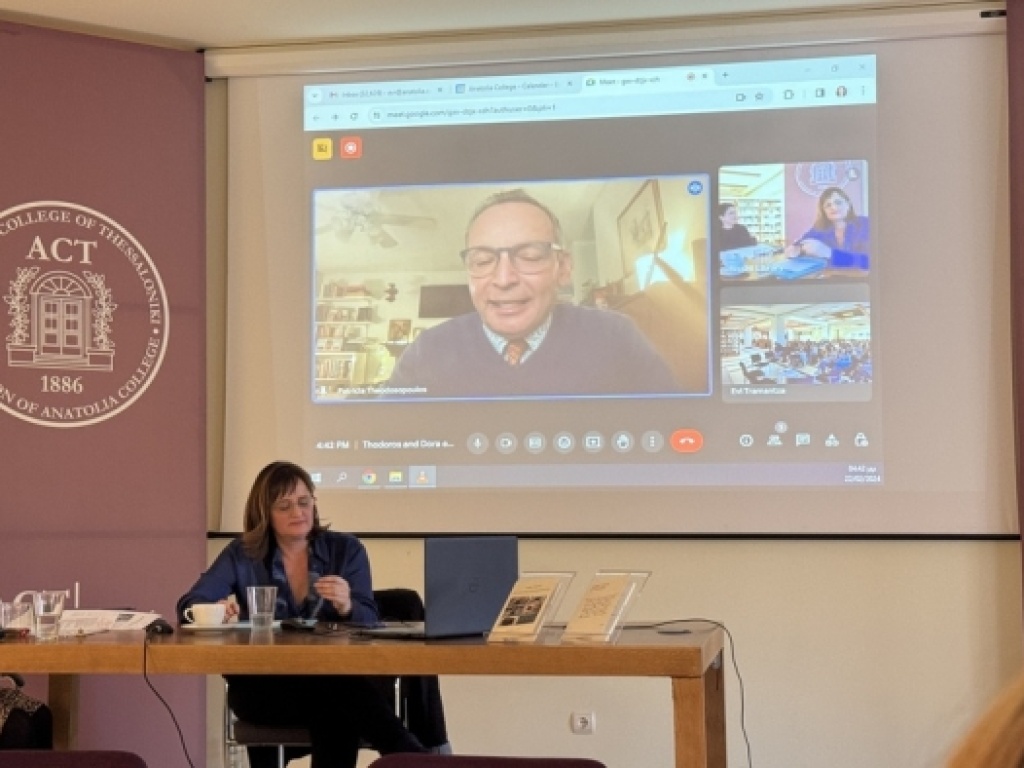
The courses are complemented by outreach activities and students have the opportunity to attend events and lectures by important speakers from the academic, political, diplomatic and business world of the Balkans and various international organisations (such as the Stability Pact for Southeast Europe, the Center for Democracy and Reconciliation in Southeast Europe, the Southeast European Cooperative Initiative, the Institute for International Education) which are active in the region. Over the past several years ACT has welcomed a steady stream of guest speakers on Balkan affairs, including Benjamin Karakostanoglou, Richard Schifter, Dusan Batakovic, Edi Rama, Mihalis Christidis, Nadezhda Mihhaylova, Evangelos Kofos, and Jens Bastian, to name but a few. Under the auspices of the Kulukundis Center, ACT has also organized study trips to Skopje, Kosovo and Sofia, while here in Thessaloniki ACT students have attended press conferences and other events organized by the major actors in regional affairs.
Balkan Studies Lectures
Staff
ACT instructors and staff have developed professional and research expertise in such issues as EU and US policy in Southeast Europe, regional trade and transport, economic and social development, civil society, gender issues and women’s rights. As a result, we bring an unparalleled accumulation of professional experience in regional affairs into our classroom instruction. ACT instructors with teaching and research interests in the Balkans include Anna Maria Konsta (European integration, comparative legal systems, women’s rights), Aigli Brouskou (ethnography), Maria Kyriakidou (modern Greek history, gender and politics), Yanis Tsorbatzoglou (European and Balkan integration),Sotiris Serbos (European external relations, Greek foreign policy, Turkey), and David Wisner (US policy in Southeast Europe). ACT also collaborates with a wide-ranging network of local and regional scholars and practitioners who give regular guest lectures at ACT on Balkan affairs.
Contact
For further information please contact Dr. Maria Kyriakidou, Coordinator, Lucy Center for Balkan Studies on ++302310-398-233 or email her at markyria@act.edu.
|
 |
|