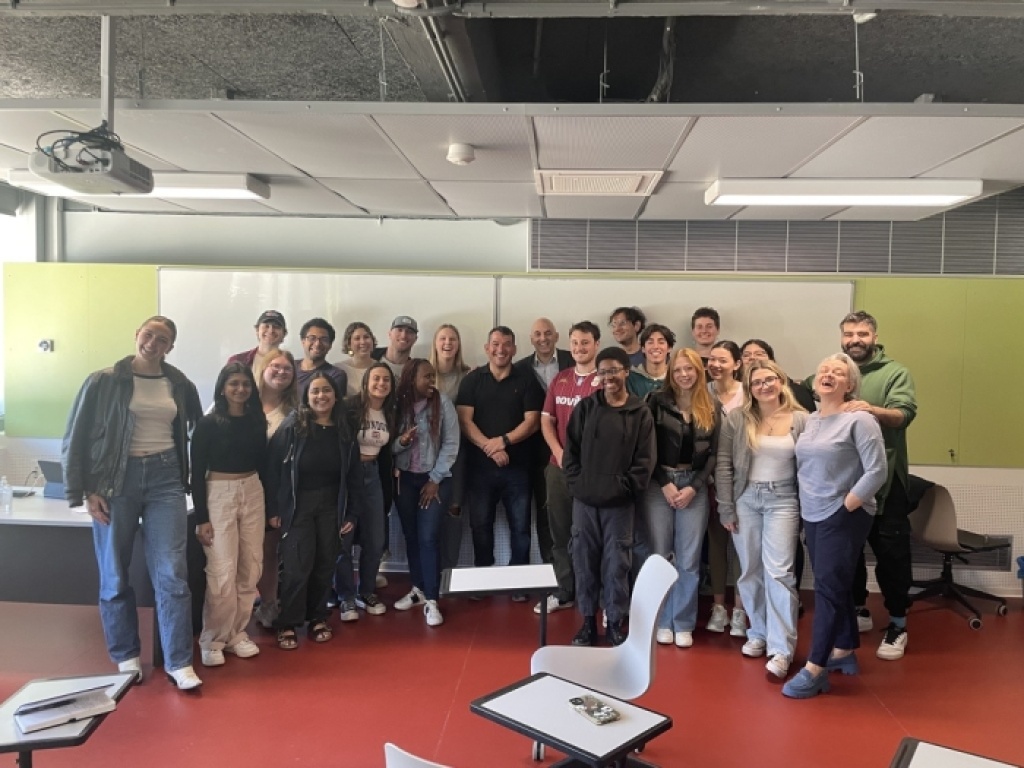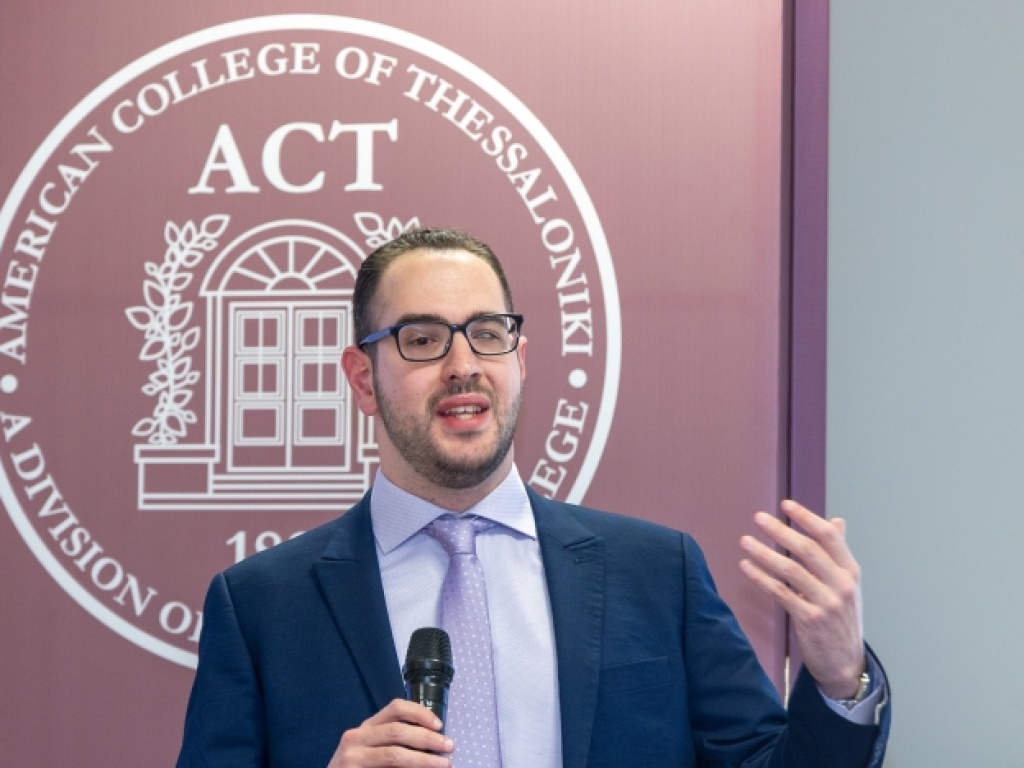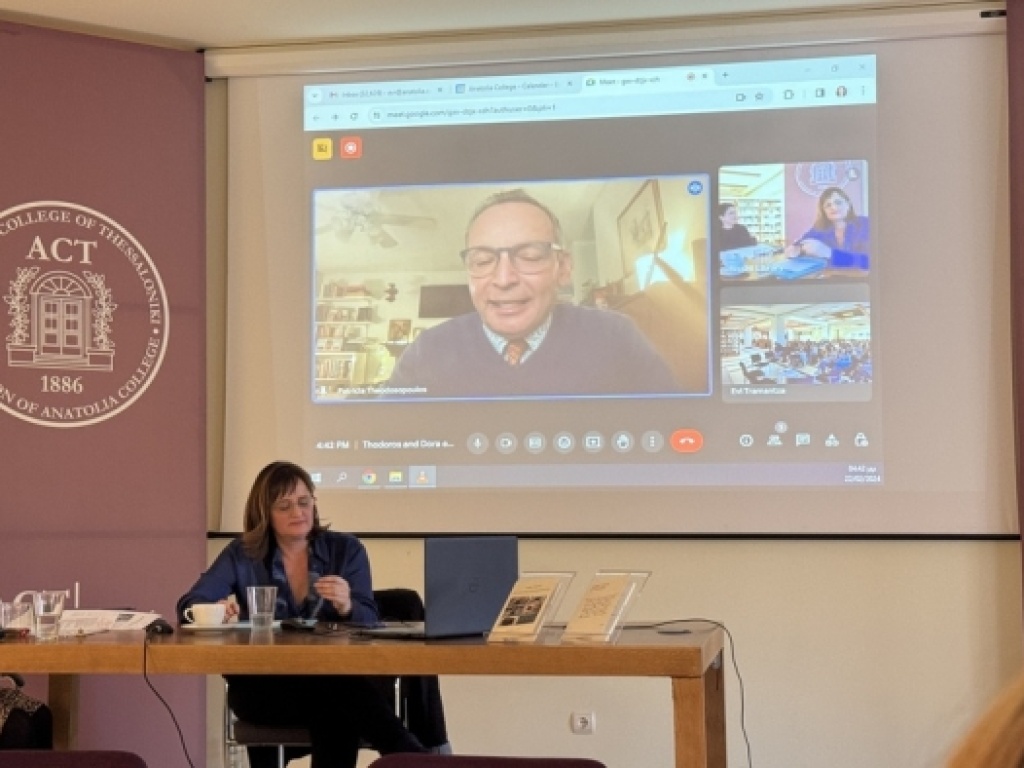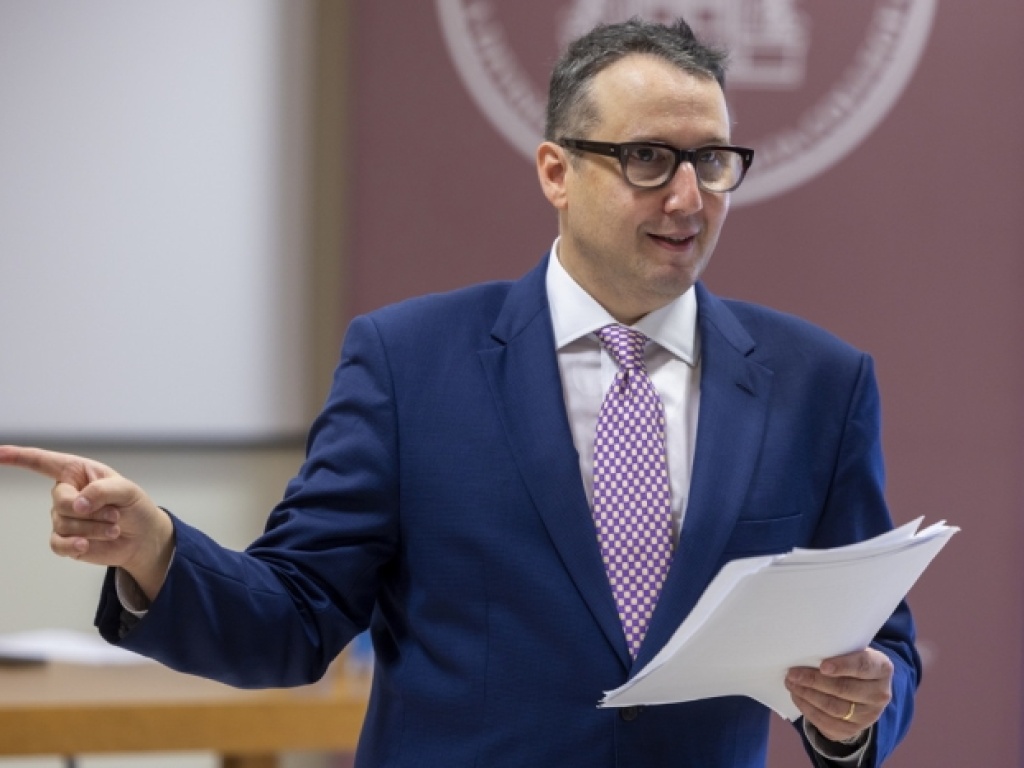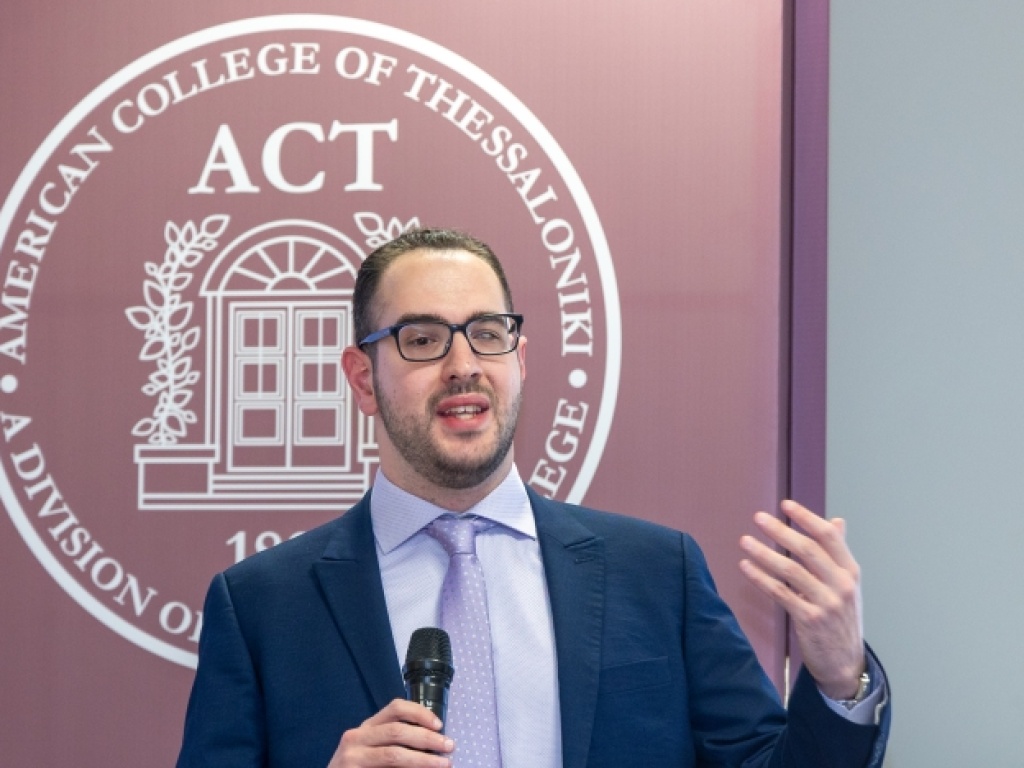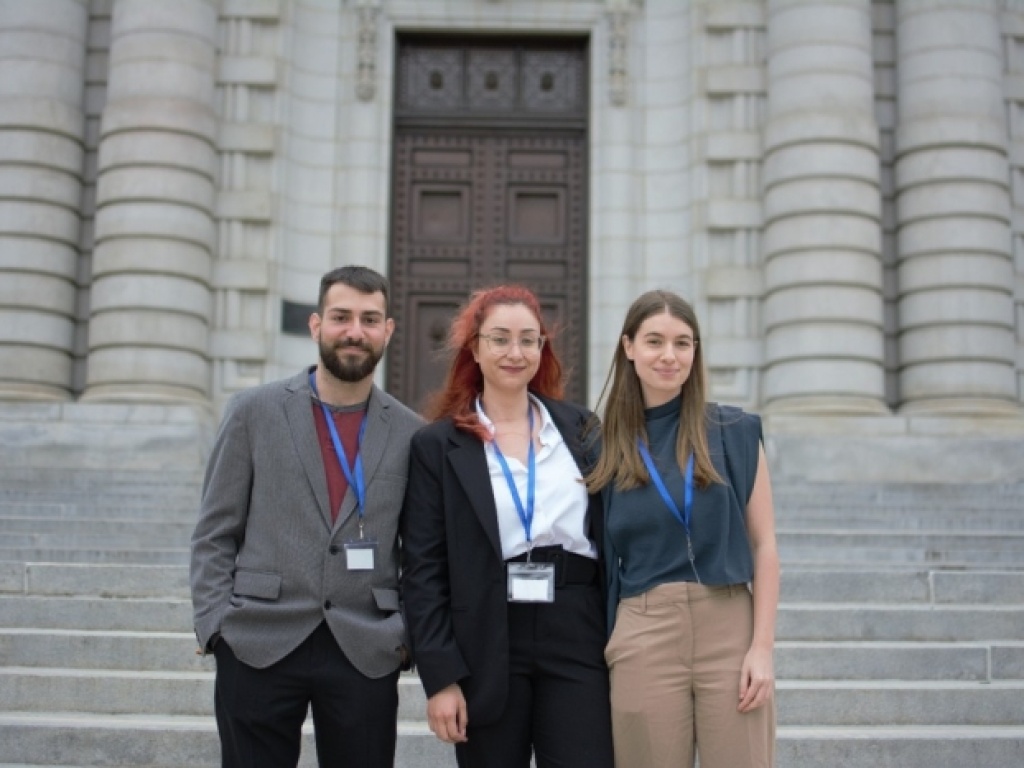
Dr. David Wisner talks about ACT's programs in Humanities and Social Sciences.
"Wherever you are and however it arrives, a liberal education can liberate you from the coarseness and crudity of circumstances beyond your control."
Bill Moyers
“… the worth of a state… is the worth of the individuals composing it.”
John Stuart Mill
Welcome to ACT’s Division of Humanities and Social Sciences, one of Europe’s premier centers for public and international affairs.
The Division provides introductory and advanced instruction in all areas of the human sciences. Students may major in International Relations, with a unique internationally oriented pre-law option for American students and career-track training in international diplomacy for all degree candidates; do 2+2 degrees in English or Psychology in collaboration with select universities in the US; take one of our many minors (Diplomacy and International Relations, European and Balkan Studies, Communication and Media, Literature and Humanities, Social Studies); or, finally, register for special certificate programs in Hellenic Studies and in Teaching English as a Foreign Language (TEFL).
The Division is also home to the Michael S. Dukakis Chair in Public Policy and Service and the Lucy Center for Balkan Studies. Both provide ample opportunities for students to interact directly with senior practitioners in public affairs, such as Alvaro de Soto, Nicholas Burns, Nikiforos Diamandouros, Edi Rama, Radmila Sekerinska, Dušan Bataković, HM Simeon of Bulgaria, Geert-Hinrich Ahrens, and many others. In select cases students in good standing also have the option of undertaking a formal internship with an organization in Thessaloniki or elsewhere in the region.
Our graduates have had outstanding success in post-graduate study, studying at such prestigious European and American universities as Cambridge, Oxford, LSE, SOAS, Edinburgh, the College of Europe, KUL Leuven, ULB Brussels, the Sorbonne, HEI Geneva, Texas, and Johns Hopkins School of Advanced International Studies. Their professional success has been even more impressive, with placements in the World Bank, the European Commission, NATO, the International Office of Migration, the East-West Institute, the Center for Democracy and Reconciliation in Southeast Europe, many ministries in the countries of Southeast Europe, and diverse companies in the private sector.
We welcome you to take a tour of this site and to address inquiries to David Wisner, Division Chair, at drd@act.edu.
Everyone at ACT has a place in my heart, and I always feel that I owe to each one of you something different while at the same time unique for the person that I am, for all the “tools” you gave me and for always believing in me and supporting me.
Krysta Kalahani, ACT Class of 2007
I have realized that the knowledge I gained at ACT is exceptional and serves as excellent starting point for the future.
Aleksandar Jovanoski, ACT Class of 2005
The HIR Department has a great reputation and I am very glad that I finally got a minor in IR, even though my major was Psychology and international relations was an unfamiliar subject for me...
Eleni Stagiriou, ACT Class of 2003
After all, when I think about it, Thessaloniki and ACT WAS a GREAT experience; it helped me in many different ways but, most importantly, it helped me to grow up as a person.
Erisa Lame, ACT Class of 2006
… before studying abroad I was a biology student, and it wasn't until taking a class in European integration at ACT that I decided to change to Political Science. I loved the forum that class provided for students from various parts of the world to discuss different issues. The experience really instilled a passion in me to pursue a career involving politics on an international level.
Ken Ganey, study abroad student, University of Missouri, Fall 2005
I definitely know now that ACT rocks...
Artela Mitrushi, ACT Class of 2007
MISSION STATEMENT
Our mission is to offer a dynamic student-centered civic education; to train youth for leadership roles in regional and international affairs; and to contribute meaningfully through academic instruction, applied research, and professional outreach to cooperation and peaceful co-existence in Greece, the Eastern Mediterranean, Southeast Europe, and the larger Trans-Atlantic community.